Guide
How to catalog a book, record or camera collection
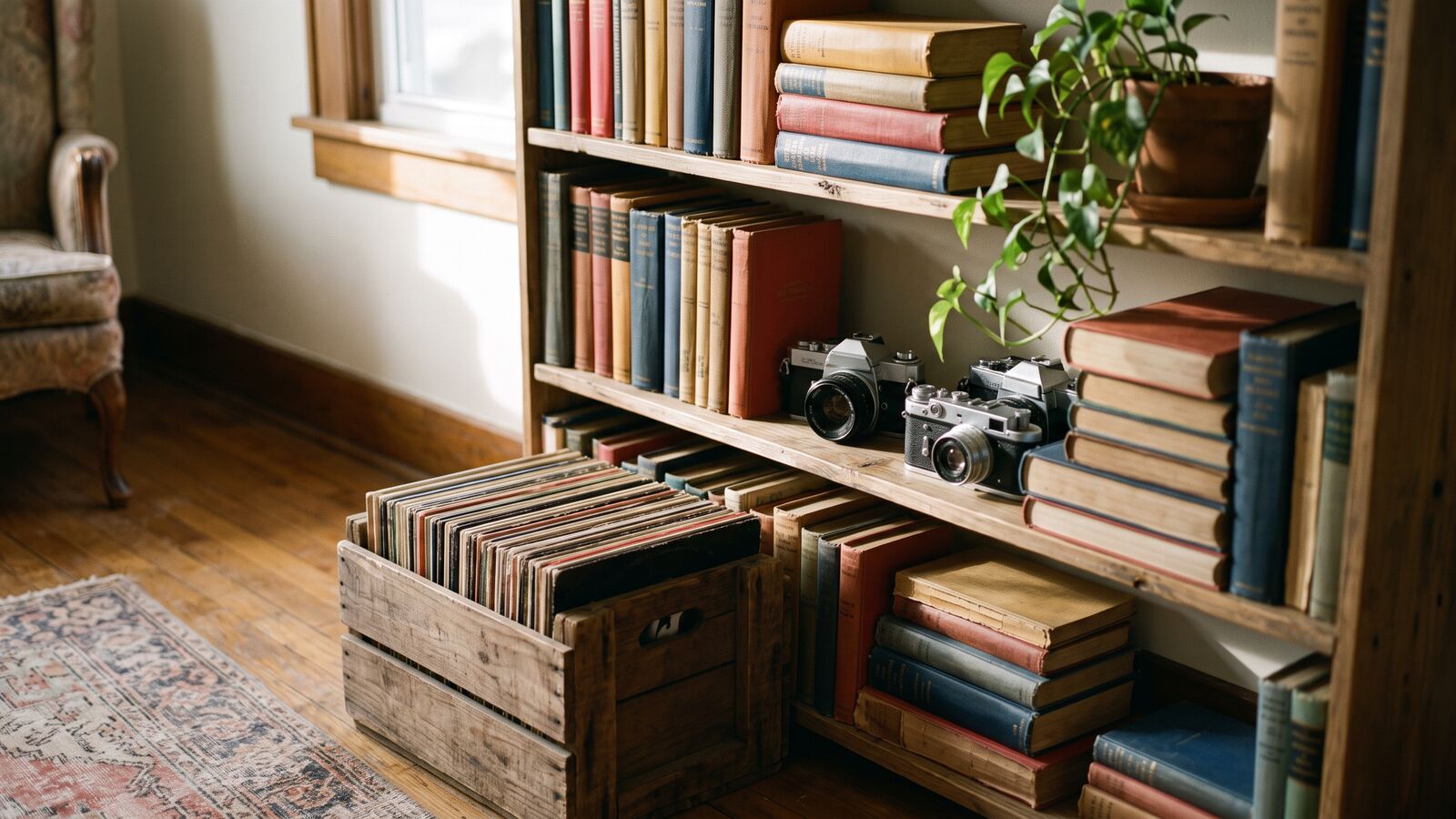
You are in a second-hand bookshop holding a first edition you are almost sure you already own. Or a friend asks to borrow a record and you realise you have no idea who has the last one you lent. Or a pipe bursts under the shelf and the insurer asks what was on it.
Every collector meets one of these sooner or later. All three have the same answer: a list of what you have, where it is, and what state it is in.
Decide what is worth recording
The fastest way to abandon a catalog is to record too much. Start with the fields you will actually use:
- Name: title and author, artist and album, or make and model.
- Where it lives: which shelf, crate or cabinet.
- A photo: the cover or the object itself. This is how you recognise it at a glance.
- Notes: edition, pressing, condition, serial number, anything that makes this copy yours.
Two more are worth adding for anything valuable: what you paid and when. They matter for insurance and resale, and you will not remember them later.
Organize by shelf, not by genre
It is tempting to build a perfect classification. Resist it. Record where each thing physically sits: "Living room, bookshelf, top shelf." You can always search by name. What you cannot do without the location is find the thing once the search tells you that you own it.
Track what you lend
Collections shrink through lending far more than through loss. The fix is one line at the moment you hand something over: what it is, who has it, and the date. Then you can ask, months later, without the awkward "did I lend you that?"
The catalog pays for itself the first time it stops you buying a book you already own.
Start small, then fill in
- Pick one shelf or one crate.
- Photograph each item and give it a name.
- Add notes only where they matter: rare editions, signed copies, things with a serial number.
- Do the next shelf when you have ten minutes.
A catalog of the thirty things you care about most is more useful than a half-finished one of everything.
Keep a copy outside the house
If the catalog lives only next to the collection, it is lost with it. Export it now and then, as a spreadsheet or a PDF with photos, and keep that copy somewhere else: your email, a cloud drive, a relative.
Catalog it once, find it every time
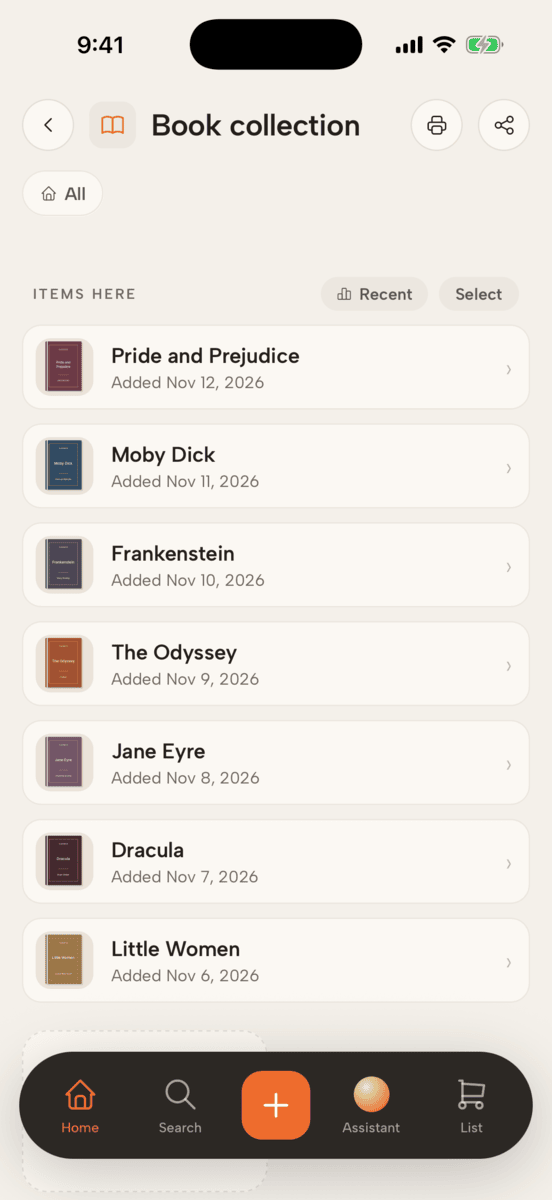
Remio keeps each book, record or camera with up to three photos, notes, where it sits and who has it on loan. Search before you buy a duplicate, and export the whole collection to Excel or a PDF with photos. Free to start, nine languages.
Get Remio on the App Store