Guide
How to keep track of warranties and receipts
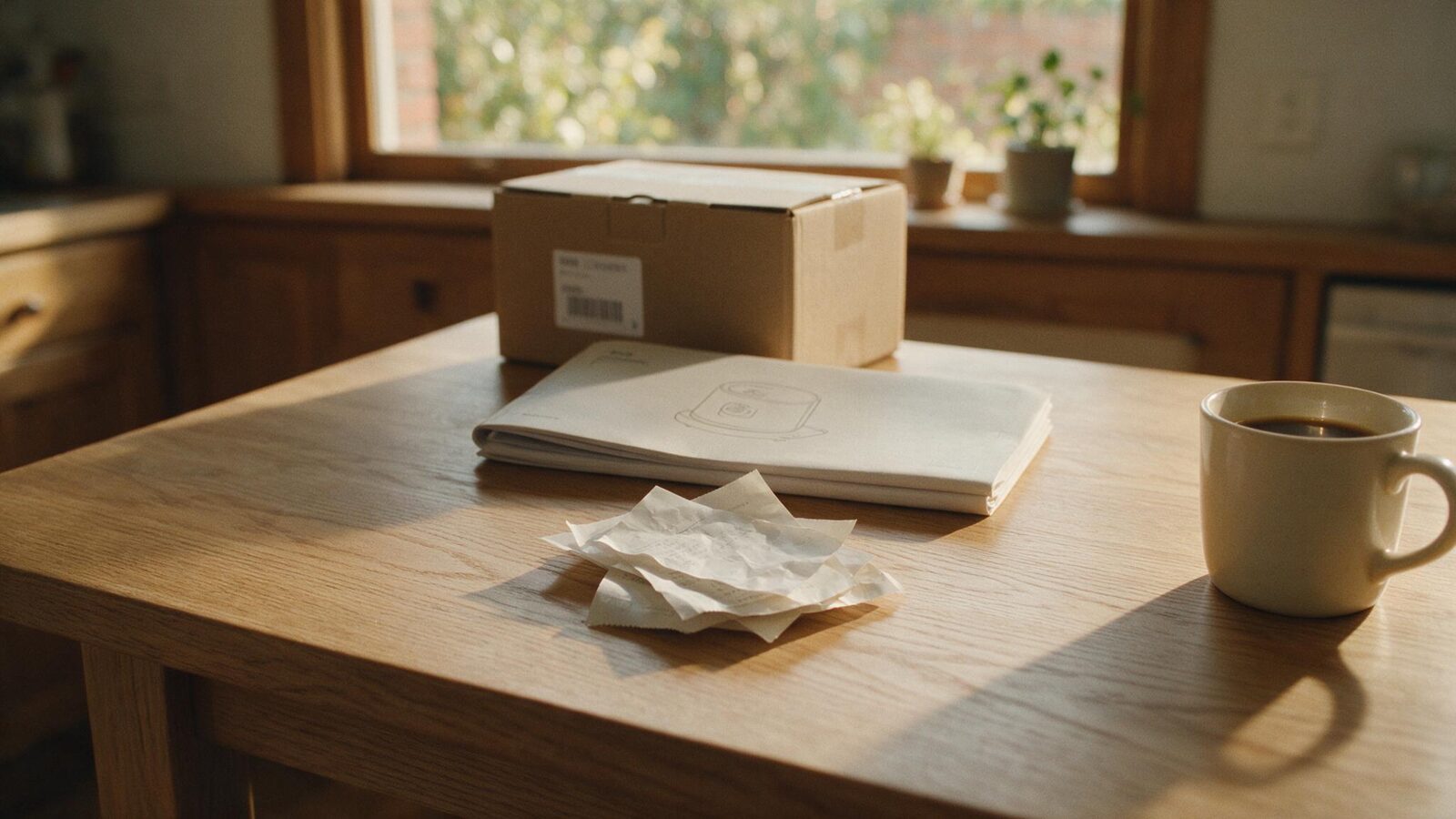
The dishwasher stops draining in month twenty-two of a two-year warranty. You are covered. You call, they ask for proof of purchase, and you discover the receipt was thermal paper that faded to blank three summers ago, or it was in an email account you no longer use, or it is in a drawer with four hundred other receipts.
Nothing about the warranty failed. The paperwork did.
What you actually need to claim
Requirements vary, but almost every manufacturer or retailer asks for some combination of:
- Proof of purchase with the date and the seller. This is the one people lose.
- The model and serial number of the specific unit.
- Where you bought it, because claims often go through the retailer rather than the maker.
- Sometimes registration, if the extended cover required signing up at purchase.
Keep those four things and you can claim. Keep the glossy warranty booklet but lose the receipt and you generally cannot.
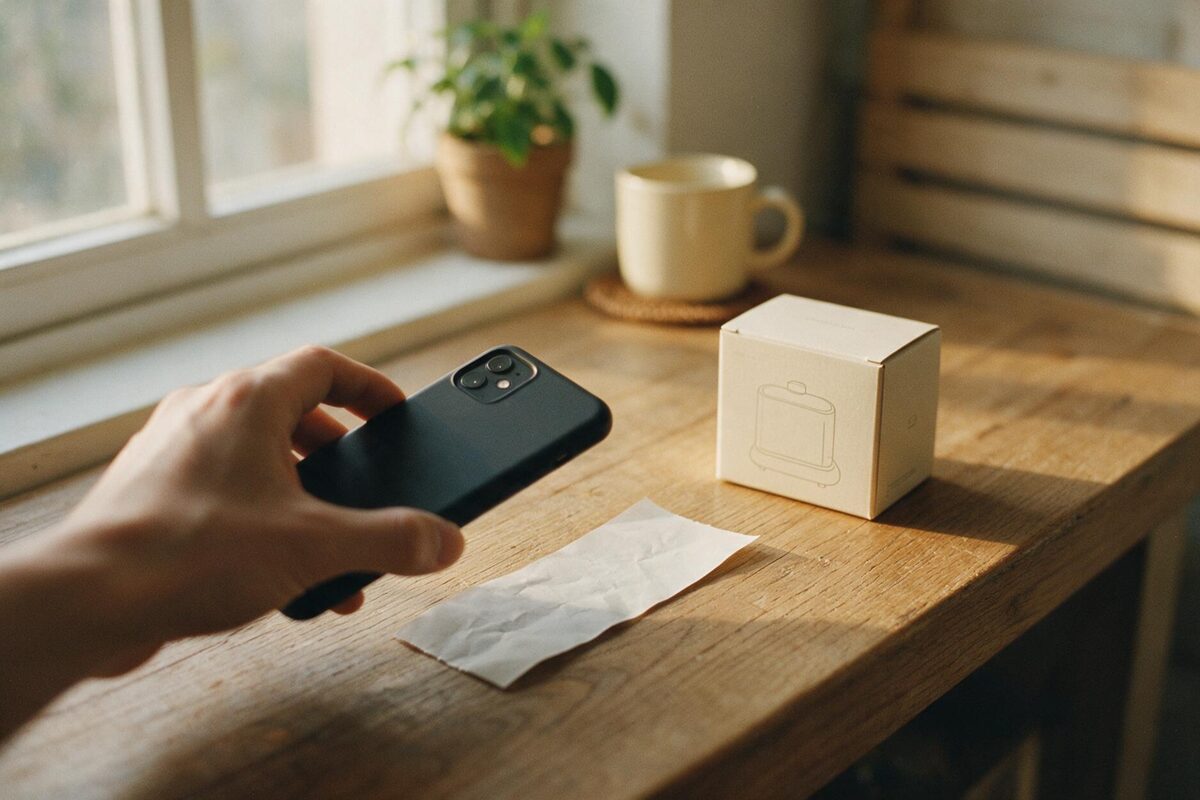
Photograph the receipt on the day, not later
Thermal receipts fade. Not over decades, over months, faster in a warm room or a sunlit kitchen. By the time you need one, it can be a blank strip of paper. This is the single most common reason a valid claim dies.
So the rule is simple: photograph the receipt the day you get it. Not when you get around to filing. That day, while it is still legible and still in your hand.
Photograph the box too, or at least the label on it. That is where the model and serial number live, and once the box is gone you are reading a sticker on the back of an appliance wedged against a wall.
A photo taken on the day of purchase is worth more than the most organised filing system built six months later.
Store it where you will actually look
A physical folder works, right up until you move, or the folder gets full, or you need the receipt while standing in the shop. Whatever you use should meet three conditions:
- It is searchable. You will remember "the dishwasher," not the date or the brand.
- It is with you. Claims often start while you are out, on the phone, or in the store.
- It survives a move. Paper folders are exactly what goes missing between houses.
A dedicated folder in your photo library is a reasonable free start. Its weakness is that it has no dates and no reminders, so you will not know what is still covered without opening every photo.
Know what is still under cover
The second half of the problem is not proof but timing. Warranties expire quietly. Nobody writes to tell you that your cover ends in three weeks, and that is exactly when a fault is worth reporting rather than living with.
Two dates are worth recording for anything expensive:
- Purchase date, which starts the clock.
- Cover end date, which is the one that matters. Set a reminder about a month before it, so a fault you have been tolerating gets reported while it is still free to fix.
That one-month buffer catches the everyday case: the thing that has been making a noise for a while and which you would definitely have mentioned, had you known the clock was running out.
Worth keeping beyond the warranty
The same records serve two other purposes people forget until they need them:
- Insurance claims. After a burglary, a fire or a flood, insurers ask what you owned and what it cost. Photographs with dates are far better than a list written from memory afterwards.
- Resale. Original receipt, box and serial number raise the price of anything worth reselling, and prove it is not stolen.
This is why a warranty habit tends to grow into a general home inventory. The record you kept for the dishwasher turns out to be the record you needed for the insurance claim.
A workable routine
For anything over a certain value, pick your own threshold, do this at the moment of purchase:
- Photograph the receipt while it is legible.
- Photograph the box label with model and serial number.
- Note where the item now lives in the house.
- Note the purchase date and when cover ends.
- Set one reminder a month before that date.
It takes under a minute and it is the difference between a free repair and buying the thing twice.
Keep the proof with the thing itself
Remio holds the item, its photo, where it lives in your home, and when its warranty runs out, in one place. It nudges you before cover ends and before something you lent out is forgotten. Free to start, nine languages.
Get Remio on the App StoreThe short version
Photograph the receipt on the day, because thermal paper fades. Capture the model and serial from the box before you throw it out. Record when cover ends and set a reminder a month early. Keep it all somewhere searchable that travels with you, and the same records will serve your insurance and your resale value long after the warranty is gone.