Guide
How to label moving boxes so you can find anything after the move
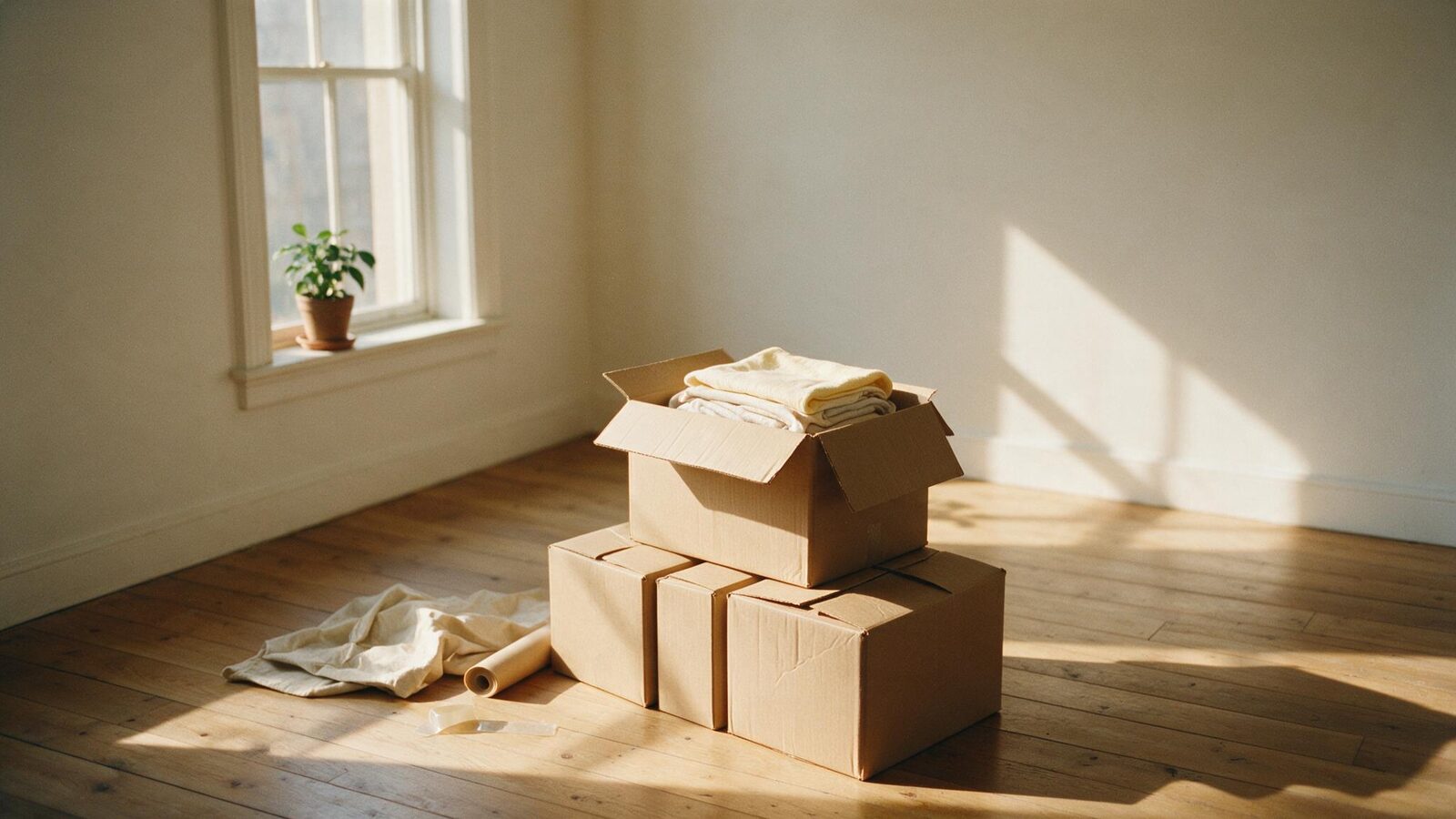
Every move produces the same artifact: a box in the corner of the spare room, labelled "misc," still sealed eighteen months later. Nobody opens it because nobody knows what is in it, and nobody knows what is in it because on packing day the label was written by an exhausted person holding a marker in one hand and tape in the other.
The problem is that most labelling systems ask you to write more at exactly the moment you have the least patience. A system that works has to ask for less, not more.
Why room labels are not enough
"Kitchen" tells the movers where to put the box. It tells you nothing about whether the coffee grinder is inside. After the move you do not need to know which room a box belongs to. You need to answer questions like:
- Which box has the phone chargers?
- Where is the box with the router and the cables?
- Which one has the bedsheets, because it is eleven at night?
- Did the good knives go in the kitchen box or the one from the pantry?
Room labels answer none of these. What answers them is a list, and a list needs a key.
The system: number, list, photograph
1. Number every box. Nothing else on the outside.
Write a big number on three sides and the top of every box. That is it. No contents, no arrows, no essay. Numbers are fast to write, impossible to misread, and readable when the box is stacked in a way you did not plan for.
Add one word for the destination room if the movers need it: 14 · Kitchen. Nothing more.
2. Keep one list, and keep it on your phone
The number is a key that points at a list. Against each number, write what is actually inside, in the words you will use when searching later. "Chargers, cables, router" beats "electronics."
Keep the list somewhere you will have with you in an empty apartment at midnight, which means your phone, not a notebook that is itself in a box. A shared note works if more than one person is packing.
3. Photograph the open box before you tape it
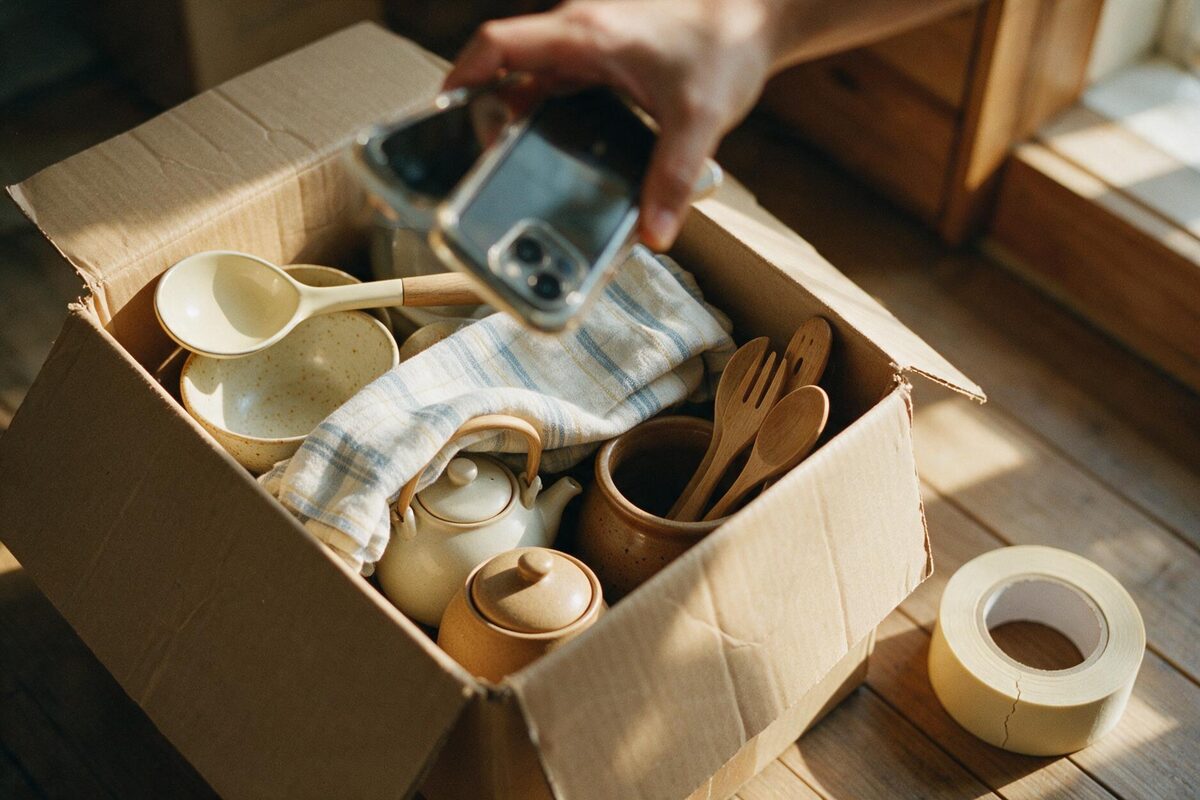
This is the highest-value five seconds of the entire move. One photo of the open box, taken from above, captures everything you did not have the patience to write down. Later, you do not have to remember whether the good scissors went in box 22. You look.
Write a number, take a photo, tape it shut. The photo carries all the detail the label never could.
Pack a first-night box and mark it clearly
One box, packed last, opened first, carried in your own car rather than the van. Give it a marking you cannot miss, a whole side in colour, not a number.
- Bedding for every bed, or at least sleeping bags
- Toilet paper, soap, hand towel, toothbrushes, any medication
- Phone chargers for everyone
- A knife or scissors for opening the other boxes
- Kettle or coffee, cups, a roll of kitchen paper
- A change of clothes each
Everything else can wait a day. This box is the difference between a rough first night and a miserable one.
Mark the boxes that must not be lost
Some boxes carry things that are painful or impossible to replace: documents, hard drives, jewellery, photographs, anything sentimental. Give them their own marking and count them onto the van and off it again. Movers lose boxes rarely, but you only need it to happen once.
Same logic for anything fragile enough that stacking matters. "Fragile" written on the side is a request. A box that is clearly the odd one out gets treated differently.
Unpacking in the right order
With a numbered list you can unpack by need rather than by whichever box is nearest the door:
- First night box, immediately.
- Kitchen basics and bathroom, day one. A working kettle changes the mood of a house.
- Clothes and bedding, day one or two.
- Everything you use weekly, over the first week.
- Everything else, whenever. Some of it never, which is its own useful signal.
The boxes still sealed after two months are telling you something honest about what you actually use. That is the best moment to donate, not on packing day when everything feels essential.
Keep the list after the move
Most people delete the packing list once the boxes are empty. That is a mistake. Boxes that go straight to a loft, a garage or a storage unit stay packed for years, and those are precisely the ones you will need to search later. Keep the numbers on the boxes and keep the list.
If you moved into a place with less storage, some boxes will never be unpacked at all. A list turns that from a problem into a filing system.
Keep the list without typing it
Remio was built for exactly this. Photograph what goes in the box, its AI names each item, and you tell it which box and which room. After the move, search "router" and it tells you box 14, in the garage. Free to start, nine languages.
Get Remio on the App StoreThe short version
Number the boxes instead of describing them. Keep one list on your phone. Photograph each box open before you seal it. Pack a first-night box and guard it. Then unpack by what you need rather than what is closest, and keep the list for the boxes that never get opened.